


Top Passenger Vans for Families & Groups in 2026
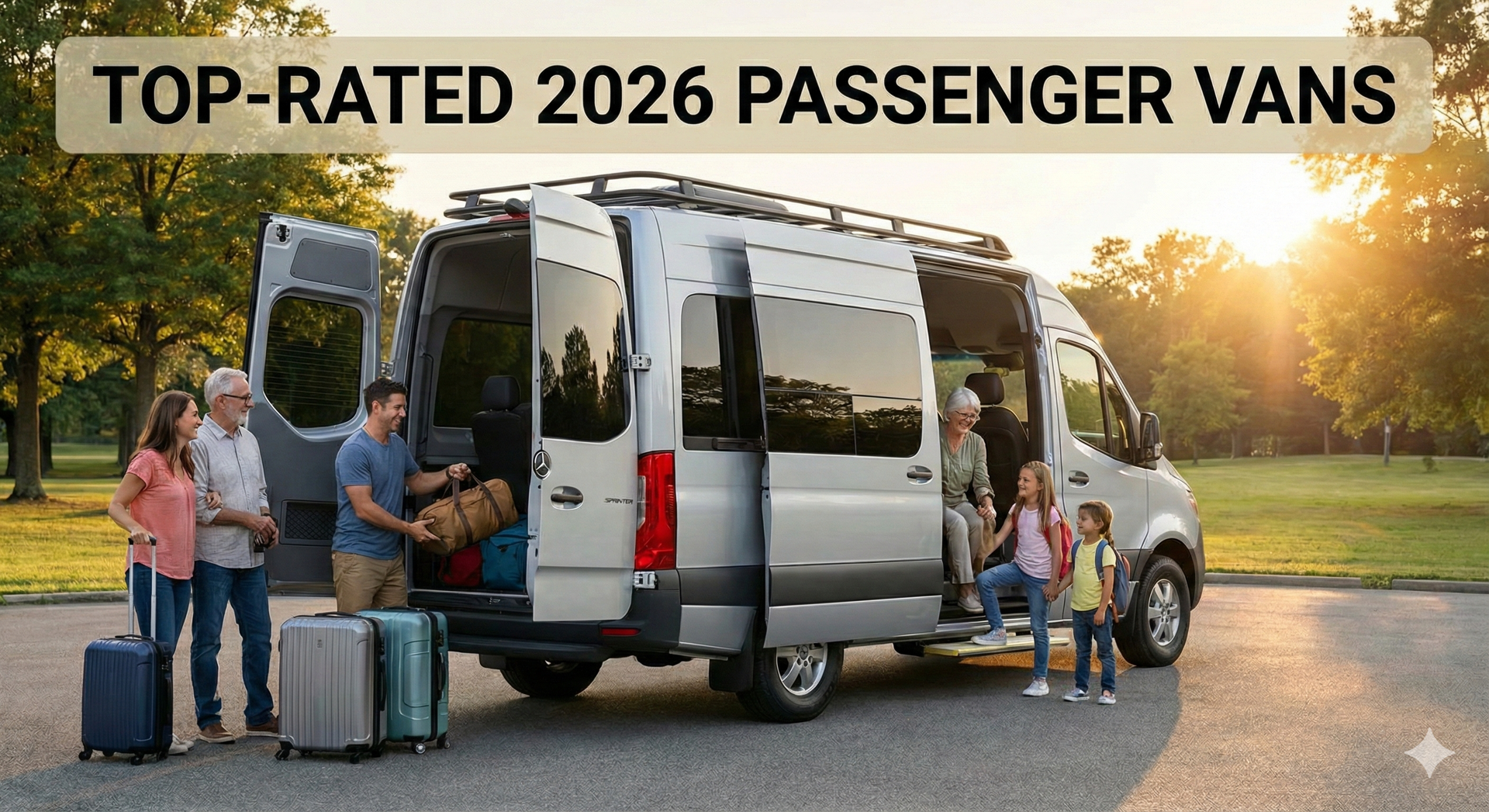
Top Passenger Vans for Families & Groups in 2026
2026 Best Passenger Vans: Top Picks for Large-Group Transport & Family Use
Choosing the right passenger van means finding a vehicle that safely transports your crew, which could be a large family, a church group, or a team heading to the job site. True passenger vans come with factory-installed seating, proper seatbelts, and integrated safety systems that cargo vans with aftermarket seats simply can't match.
This guide breaks down the top passenger van models for 2026, compares high-capacity and mid-capacity options, explains real ownership costs, and walks you through the decision process so you can confidently select the right configuration.
What Makes a "Passenger Van" Different?
A passenger van is a factory-built vehicle designed specifically to transport people safely. Unlike other van types, it comes with proper seatbelts, airbags, and safety features for every passenger seat directly from the manufacturer.
This design sets it apart from a window van, which is essentially a cargo van with windows but no rear seating. It also differs significantly from cargo vans that have aftermarket seats added later, since these conversions often lack proper safety equipment like seatbelt anchors or LATCH points for car seats.
In a passenger van, the manufacturer installs and tests all safety components together during production. These factory-installed seat belts are critical safety equipment that reduces the risk of fatal injury in SUVs, vans, and pickups compared to cars.
Moreover, these vehicles typically seat eight to fifteen people and include convenient features like sliding doors, multiple rows of seating, and climate control that reaches all passengers.
Family Use vs. Group Use: Key Considerations
The way you plan to use the van helps determine which features matter most when choosing between passenger van options. Families using a van every day will need different features than groups using it occasionally.
Daily Errands, Carpool, and Sporting Events
For families with lots of kids, convenience and safety come first. Shoppers often compare different large family vans to find the right one. You'll need easy access to LATCH anchors for car seats, power sliding doors for tight parking spaces, and low roof models that fit in your garage.
Consider these features when shopping for best passenger vans for large families:
- Cargo Space Behind Seats: Room for strollers, groceries, and sports equipment
- Step-in Height: Lower is better for kids and elderly passengers
- Fuel Economy: Important for daily driving and carpools
- Garage Compatibility: Low roof vans fit standard residential garages
Weekend Getaways & Group Travel
When planning longer trips with more people, comfort becomes the primary consideration. You'll want spacious seating, climate control for all passengers, and sufficient cargo room for everyone's luggage.
Key features for group transport include:
- Towing Capacity: For pulling trailers or cargo carriers
- AWD Capability: Essential for mountain trips or snowy conditions
- High Roof Options: Standing headroom during rest stops
- Rear Climate Controls: Keep passengers comfortable in all rows
These larger vehicles often serve as transport vans for churches, schools, and shuttle services that need reliable fleet management for group transportation.
Top Passenger Vans for 2026
Passenger vans generally fall into two groups based on seating capacity. High-capacity models: 12–15 seats, while mid-capacity models: 8–11 seats, with each category offering different strengths in safety, performance, and interior space.
High-Capacity Models: 12–15 Seats
These full-size vans maximize seating capacity while meeting federal safety standards. The GMC Savana can accommodate up to 15 passengers, making it one of the highest-capacity options available.
Here's how the leading 12-passenger vans compare across key specifications:
Model | Max Seating | Roof Heights | AWD/4x4 | Fuel Options | Key Strengths |
15 | Low, Medium, High | AWD available | Gas V6, EcoBoost V6 | Wide body/length configurations, strong ADAS, smooth ride | |
12 | Standard, High | AWD available | Diesel I4 Turbo | Premium interior, excellent visibility, strong torque | |
15 | Standard | RWD only | Gas V6, V8, CNG | Proven platform, lower upfront cost, aging tech | |
15 | Standard | RWD only | Gas V6, V8, CNG | Twin of Express, solid towing, basic features | |
Upfit-dependent (up to 12) | High | FWD only | Gas V6 | High roof, front-wheel drive, requires aftermarket seating for compliance |
The Ford Transit and Mercedes-Benz Sprinter lead the market with modern safety technology like adaptive cruise control and lane-keeping assist. Both models offer efficient engine options and multiple roof heights to match different needs.
Meanwhile, the Chevrolet Express and GMC Savana use an older platform but remain popular for their lower upfront costs and proven reliability. The Ram ProMaster ships with only two front seats and requires certified upfitter installation for passenger seating compliance.
If you’re torn between Transit vs. Express, our blog can help you decide.
Mid-Capacity Models: 8–11 Seats
Smaller passenger vans are easier to maneuver and often more fuel-efficient while still offering plenty of space for most families. These versions usually use shorter wheelbases, making them easier to park and drive in busy areas.
Mid-capacity vans work particularly well for large families who occasionally need extra seats beyond their regular requirements. You can remove rear rows in some models to create hybrid cargo and passenger configurations, though you should check local laws about seat removal before making modifications.
Cost & Ownership: Budgeting for Your Van
Passenger vans cost more to operate than minivans due to their larger size and commercial-grade components. While the average new vehicle ownership cost is $11,577 annually, understanding these ongoing expenses helps you budget effectively for total ownership costs over the vehicle's lifespan.
1. Fuel/MPG
Gas V6 models typically achieve low-to-mid teens MPG when loaded with passengers, while diesel engines perform better, often reaching mid-to-high teens for fuel efficiency. However, fuel economy drops significantly with full passenger loads, roof racks, and towing, so factor these real-world conditions into your calculations.
2. Maintenance
Commercial-duty platforms use heavier brakes, larger tires, and robust suspension systems that cost more to replace but last longer under heavy use. Diesel engines require additional maintenance like fuel filters and DEF fluid but often outlast gas engines in high-mileage scenarios, making them worthwhile for frequent long-distance travel.
3. Insurance
Fifteen-passenger vans often trigger higher premiums due to rollover concerns, and commercial use may require special policies and licensing depending on seating capacity. Look for insurance quotes that consider newer safety features, since some insurers offer lower rates for vans with stability control or driver-assist tech.
4. Resale
Ford Transit and Mercedes-Benz Sprinter models hold value well due to strong demand and upfitter support, with popular features like AWD, high roof, and low mileage commanding premium resale prices. Clean service records and maintenance documentation significantly impact resale value, while discontinued models may face parts availability issues affecting long-term worth.
How to Decide: Checklist & Buyer's Guide
Choosing the right passenger van starts with matching its features to your transportation needs. This systematic approach helps narrow your options effectively before you start shopping.
Questions To Ask Before Purchase
Start by defining your requirements with these key considerations:
- Seating Needs: Do you regularly transport eight people or occasionally need fifteen seats?
- Garage Fit: Will a high roof van clear your garage door opening?
- Drivetrain: Do you need AWD for snow or off-road access?
- Route Type: Highway driving favors diesel; city use suits gas engines
- Car Seat Requirements: How many LATCH anchors do you need for child safety seats?
- Towing Plans: What's your maximum trailer weight requirement?
- Use Classification: Personal or commercial use affects insurance and licensing
Upfit and Customization Tips
Certified upfitters can modify passenger vans for specific needs, but proper compliance is essential to maintain safety standards. Upfitters are responsible for ensuring compliance with all applicable laws and regulations. Be sure any added equipment meets federal safety standards so your van stays compliant.
FAQs
Here are answers to common questions about choosing and owning a passenger van.
What is the best passenger van on the market?
The Ford Transit Passenger leads for versatility and safety technology, while the Mercedes-Benz Sprinter offers premium comfort and diesel efficiency for long-term durability.
What van can seat ten people?
Mid-capacity Ford Transit and Mercedes-Benz Sprinter configurations seat eight to eleven passengers, making them ideal for groups of ten.
Are fifteen-passenger vans safe?
Modern 15-passenger vans are safe when properly loaded and maintained. Advanced safety features like seat belt reminders have increased belt use, which potentially saves thousands of lives annually. Keep tires inflated to specification and ensure drivers understand the vehicle's handling characteristics.
What is the difference between a passenger van and a window van?
Passenger vans have factory-installed, safety-compliant seating with proper seatbelts and airbags. Window vans are cargo vans with windows that require certified upfitter installation for passenger seating.
Should I buy new or used?
New vans offer the latest safety technology and full warranties, while used passenger vans provide lower upfront costs. Prioritize clean service records and avoid discontinued models with potential parts scarcity.
Conclusion
The right passenger van matches your specific seating needs, use case, and budget constraints. Ford Transit and Mercedes-Benz Sprinter models lead with advanced safety features and flexible configurations, while Chevrolet Express and GMC Savana offer proven reliability at lower costs.
Comvoy's nationwide inventory of passenger vans provides unbiased, transparent listings with comprehensive vehicle specifications to simplify your search and help you find the right truck, in the right place, at the right time®.
CTA Button: Shop Passenger Vans
Sources:
- Insurance Institute for Highway Safety (IIHS). Seat belts. https://www.iihs.org/research-areas/seat-belts
- AAA. AAA: New Vehicle Costs Drop to $11,577. https://newsroom.aaa.com//09/aaa-new-vehicle-costs-drop-to-11577/
- Insurance Institute for Highway Safety (IIHS). Automakers quickly improve seat belt reminders in response to IIHS ratings. https://www.iihs.org/news/detail/automakers-quickly-improve-seat-belt-reminders-in-response-to-iihs-ratings


